What the longer legs add
With shorts, the padding ends around the pelvis and upper thighs. Full-length protective pants extend further down the legs and can incorporate knee padding too. The fabric holds these components together in one garment. This can be convenient if you want a close-fitting underlayer without putting on several separate pieces each time. The knee sections still need to sit at the right height and stay in place as you bend.
Leg length and padded coverage are different things. Not every centimetre of fabric contains a pad, and knee padding does not automatically mean shin padding. The Zero PLUS RF Pants described here also have foam at the shins. For other models, we examine the areas specified for that version. A material name in a product title does not mean that every pad uses the same material, either.
Full-length pants or shorts with separate knee pads?
With full-length pants, you choose a single underlayer: the waist, seat and knees need to fit as a whole. Shorts give you more freedom to choose separate knee pads, perhaps with a different fastening, outer shell or size. If you already have knee pads that fit comfortably, you may prefer to stay with shorts. If you want to carry the padding in one garment, the full-length versions are worth considering.
More covered areas do not, by themselves, mean a higher protection rating or proven better impact absorption. A soft knee pad in an underlayer does not automatically have the same properties as a separate sports knee protector. Compare the intended use, padding position and model instructions. Always try additional components together so that edges and straps do not push each other upwards.
The full-length Demon ranges compared
This comparison describes how the models are constructed. It does not rank them by protection level. Check the sizing information and care instructions for each version too.
| Range | Knee area | Another feature of the full-length version |
|---|---|---|
| Early FlexForce X and XConnect | EVA knee padding; the older versions described have hook-and-loop adjustment. | Long, ventilated legs, hip and thigh padding, and D3O at the tailbone. |
| FlexForce X V4 | Foam at the knees. | D3O at the tailbone and seat, padding at the hips and thighs, and X-Connect. |
| FlexForce X V5 | Knee padding in the full-length men’s and women’s versions. | Earlier FlexForce construction with X-Connect; check the size and version for each model. |
| FlexForce X V6 | Full-length versions with knee zones. | Separate men’s and women’s models; V7 features do not automatically apply to V6. |
| X V7 D3O A.I. | Pre-shaped, removable foam knee pads with comfort cushioning, according to the model-specific EU documentation. | TPS V2, C.B.I.S. waist straps and X-Connect; men’s and women’s fits. |
| Zero RF | Soft, fixed knee padding with adjustable straps. | Stretchy unisex underlayer; ESPRO/RF component at the tailbone. |
| Zero PLUS RF | Fixed knee padding and additional foam zones. | The full-length PLUS version described also has foam at the shins. |
| Project X XRD | XRD inserts at the knees, removable through internal pockets. | Thermal knit, seven padded zones and a drawcord waistband. |
Men’s, women’s and unisex: look at the cut
A women’s garment involves more than a different colour, and a men’s version is not simply the same garment in a larger size. The V ranges have separately named men’s and women’s versions, with their own model references and size charts. Where the waist, hips and knee zones sit on your body ultimately determines whether the cut feels comfortable. Use the men’s or women’s designation as a starting point to find the right version and chart, then assess the actual fit.
An older XConnect size example makes the difference tangible: the specified men’s L has a waist range of 81–86 cm; the women’s L has a waist range of 76–81 cm and a hip range of 96–102 cm. That example belongs to those older shorts and is not a sizing rule for all V pants. V5, V6 and V7 also need their own charts. The word women’s does not establish a shorter leg length or a fixed amount of extra room at the hips.
Demon explicitly offers Zero RF, Zero PLUS RF and Project X as unisex, in both shorts and full-length pants. Here, unisex means a shared model range and size selection, not that every size fits everyone. Check the relevant circumference measurements and, for Project X, height and weight too. With full-length pants, knee-pad height and space around your footwear remain crucial parts of the fitting.
Sources and image credits: Demon XConnect · DS1623-L / DS1313, Demon · Zero RF · DS0021, Demon · Zero PLUS RF Pants · DU-DoC-2026-018 · 27-10-2026, Demon · Project X XRD · DS9030
Colour helps with recognition; the label confirms the model
The original images show that Demon often uses different colour accents. The V7 men’s models pictured here are black with green or lime accents; the V7 women’s images show black with blue or cyan accents. The preserved XConnect photos also show green accents on the men’s version and light blue on the women’s version. This can help when you are trying to identify an older garment.
Do not turn those examples into a universal colour code. Colours, waistbands and logos can vary between generations, production variants and photographs; there is no fixed rule here that women’s versions are always pink and men’s always black. For reliable identification, compare the image with the model number, label and construction details. On a full-length version, also look at the legs and knee areas, not just the waistband.
A fly is a separate design detail
A usable front opening, also called a fly, can make a toilet stop easier because the underlayer does not need to be pulled all the way down. Whether that works conveniently with your clothing also depends on the outer trousers and any connected top. An opening like this is a practical comfort detail; it says nothing about the garment’s protection.
We do not assume that all men’s models have a fly, or that all women’s and unisex models lack one. Not every generation described has a clear model specification for this feature. Check the actual opening on the particular garment. A front seam or two overlapping C.B.I.S. waist straps do not, on their own, establish the presence of a functional fly.
A day on snow is about more than the descent
You fasten your bindings, wait for a friend, kneel beside your snowboard and stand up again. In those moments, you notice that full-length crash pants offer more than seat cushioning: the knee zones move with you in the same underlayer. These everyday movements are easy to recreate during a fitting. They help you feel whether the garment stays comfortable when you kneel, squat or reach towards a binding.
Skiing adds a bent-knee stance and tall boots. The bottoms of the legs should not bunch uncomfortably above or inside the boot cuffs. Full-length protective pants are not waterproof outer trousers, either. Wear them in the clothing combination they are designed for. Project X combines padding with thermal knit, while other ranges emphasise stretchy, ventilated fabric. How warm the whole outfit becomes also depends on exertion and outer clothing.
On ice, on wheels and on a bike
Ice skating and skating on wheels often involve a deeper knee bend than ordinary walking. Do more than look in the mirror while standing upright. Adopt your sporting stance, make a few gentle push-off movements and check that the knee padding stays over your kneecaps. Your chosen pants are one part of your equipment; they do not automatically take over the role of other appropriate protection.
On a mountain bike, saddle shape and repeated pedalling also matter. Padding that feels comfortable while standing can press differently when seated. Crash pants are not a cycling chamois. Try the combination with your own cycling shorts and any separate knee pads. Extra leg coverage can feel different on a warm climb from a cold descent, so the choice between shorts and pants also depends on clothing and use.
Everyday movements matter too
Some people find extra cushioning comfortable during light everyday activities: sitting low down, crouching beside their belongings or moving on a cool surface. Freedom of movement, comfort and ease of dressing can matter more than a long list of material names. A sports garment with soft padding is not, however, a knee protector for prolonged kneeling work. Choose clothing that suits the activity and check that no pad or seam presses uncomfortably.
Full-length pants need more than a good waist fit
Start with the chart for the exact model and generation. Then put the pants on with the outer clothing and footwear you actually use. Sit, squat and bend your knees repeatedly. Check knee-pad height, the fit around the hips and seat, and the space around your boot cuffs. Tightening the waistband does not change the distance between the waist and knees.
Demon’s different size charts are not interchangeable. Some use waist circumference, others include hip circumference, and Project X matches height with weight. The same size letter can therefore fit differently. A knee strap helps adjust the fit around the leg, but cannot make pants that are too long or too short fit correctly. After each adjustment, check again that you can move freely.
Separate components and different garment constructions
The 2010 Docmeter catalogue presents impact shorts alongside separate knee and shin protectors. This illustrates a modular approach: combining shorts with a separate component for the knees. The older Demon FlexForce X and XConnect pants show another option, with knee padding integrated into a long stretch garment. Both approaches can coexist; one is not automatically the successor to, or replacement for, the other.
With V4, V5 and V6, short and long versions remain separate choices. V7 adds its own comfort and adjustment systems. Zero RF and Zero PLUS RF take different approaches to fixed padding and material combinations, while Project X places XRD inserts within a thermal layer. The interesting development lies in the construction of the garment, not simply in a higher number or a newer name.
Sources and image credits: Docmeter · Catalogue 2010 · 36–37
An adjustment strap is not a removal opening
Adjusting, removing and washing are three different actions. On the V7 pants described here, the designated knee and TPS comfort components can be taken out for care. On Zero RF and Zero PLUS RF, the padding stays in the garment; a strap around the knee does not mean the pad can be removed. Project X has XRD inserts in internal pockets. For older generations, use the instructions for that particular version instead of assuming the V7 construction applies.
Do not unpick stitched seams to remove a component. After cleaning, check that all designated removable inserts are back in the correct places and that everything is completely dry. With an older garment, also pay attention to stretched fabric, damaged seams and misshapen padding. A historical product description explains how the model was made, but says nothing about the condition of an individual used pair.
Sources and image credits: Demon · X V7 Pants · DU-DoC-2026-003 · 27-10-2026, Demon · Zero RF · DS0021, Demon · Zero PLUS RF Pants · DU-DoC-2026-018 · 27-10-2026, Demon · Project X XRD · DS9030
All full-length versions in the archive
Choose a model to read its description, see the available sizing information and view the original images. Historical versions remain with their own generation.
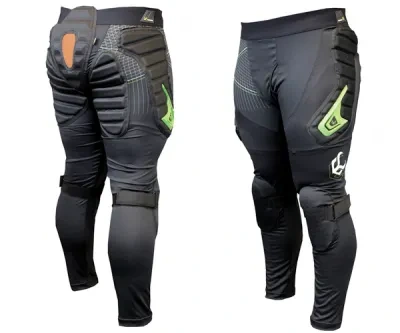
Demon FlexForce X D3O Pants
This early full-length FlexForce X brings tailbone padding and EVA knee sections together in a ventilated underlayer. The described hook-and-loop adjustment helps position the knee sections. When putting them on, look beyond the waist: bend your legs and check where the padding sits.
View features and sizes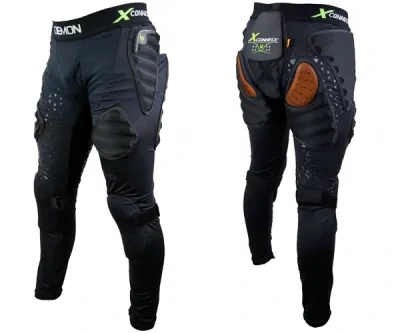
Demon FlexForce X V4 D3O Pants
The full-length V4 distributes padding across the tailbone, seat, hips, thighs and knees. The knee sections use foam, while D3O is specified around the seat and tailbone. This generation already shows why it helps to examine each area separately, rather than applying one material name to the entire garment.
View features and sizes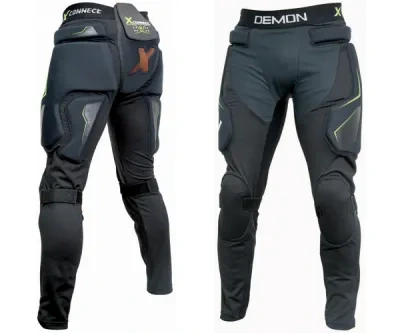
Demon XConnect D3O Pants
The full-length XConnect extends down the legs and incorporates EVA padding at the knees. The original product description specifies hook-and-loop adjustment to position the knee sections. The lower-back extension and attachment to a compatible top are separate design features; they do not replace a check of knee-pad height.
View features and sizes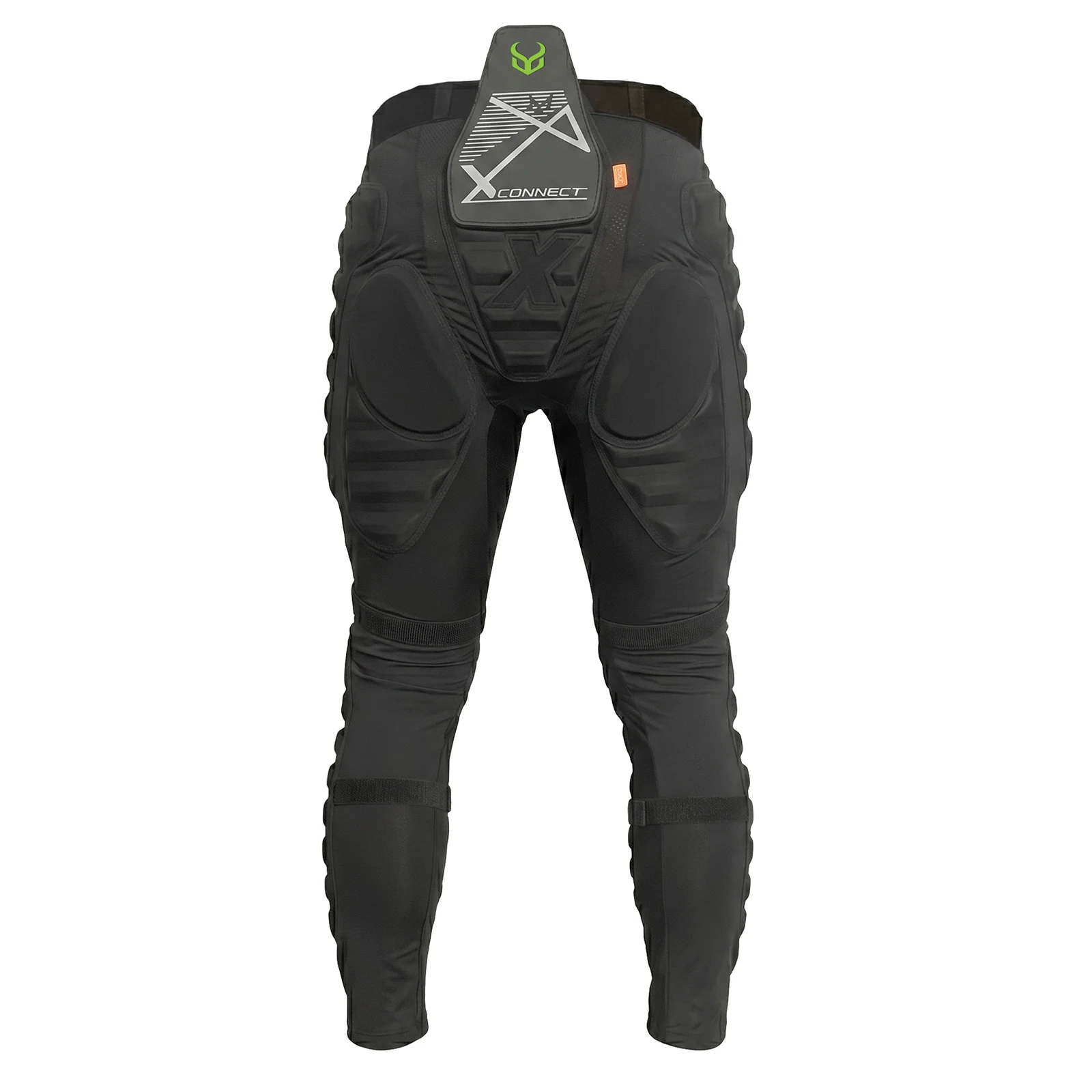
Demon X V7 D3O A.I. Men's Pants
The full-length V7 men’s pants add pre-shaped foam knee pads to the cushioning around the hips, seat and tailbone. The knee and pelvic areas are therefore padded within one stretchy, ventilated underlayer. The knee sections can be removed for care; the fixed D3O component and adjustable TPS comfort insert remain separate parts with their own functions.
View features and sizes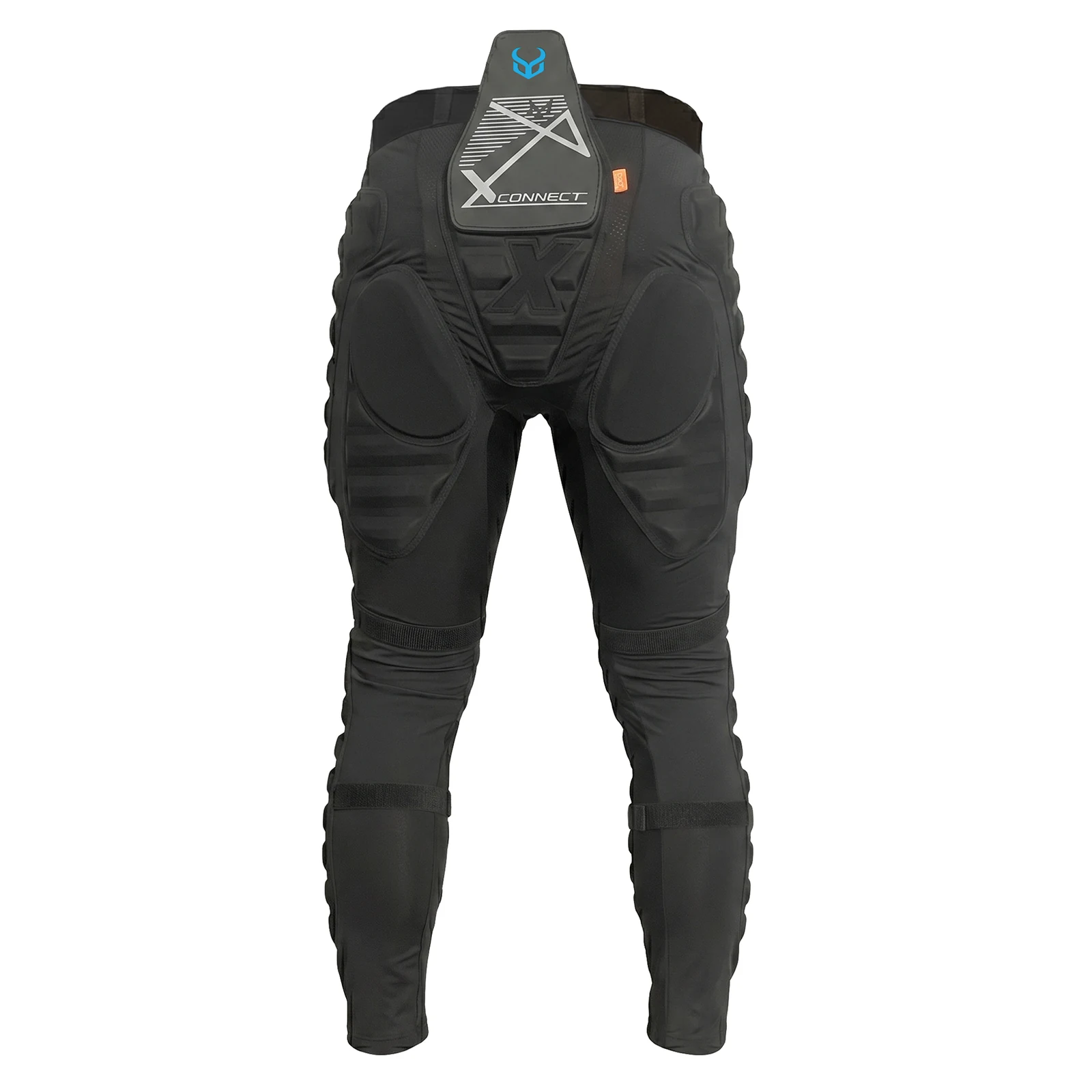
Demon X V7 D3O A.I. Women's Pants
The V7 women’s pants have their own model reference and size range. The full-length design combines pelvic padding with pre-shaped, removable foam knee pads. Use the women’s size chart and check where the padded areas sit on your own body; a men’s size with the same letter is not a direct substitute.
View features and sizes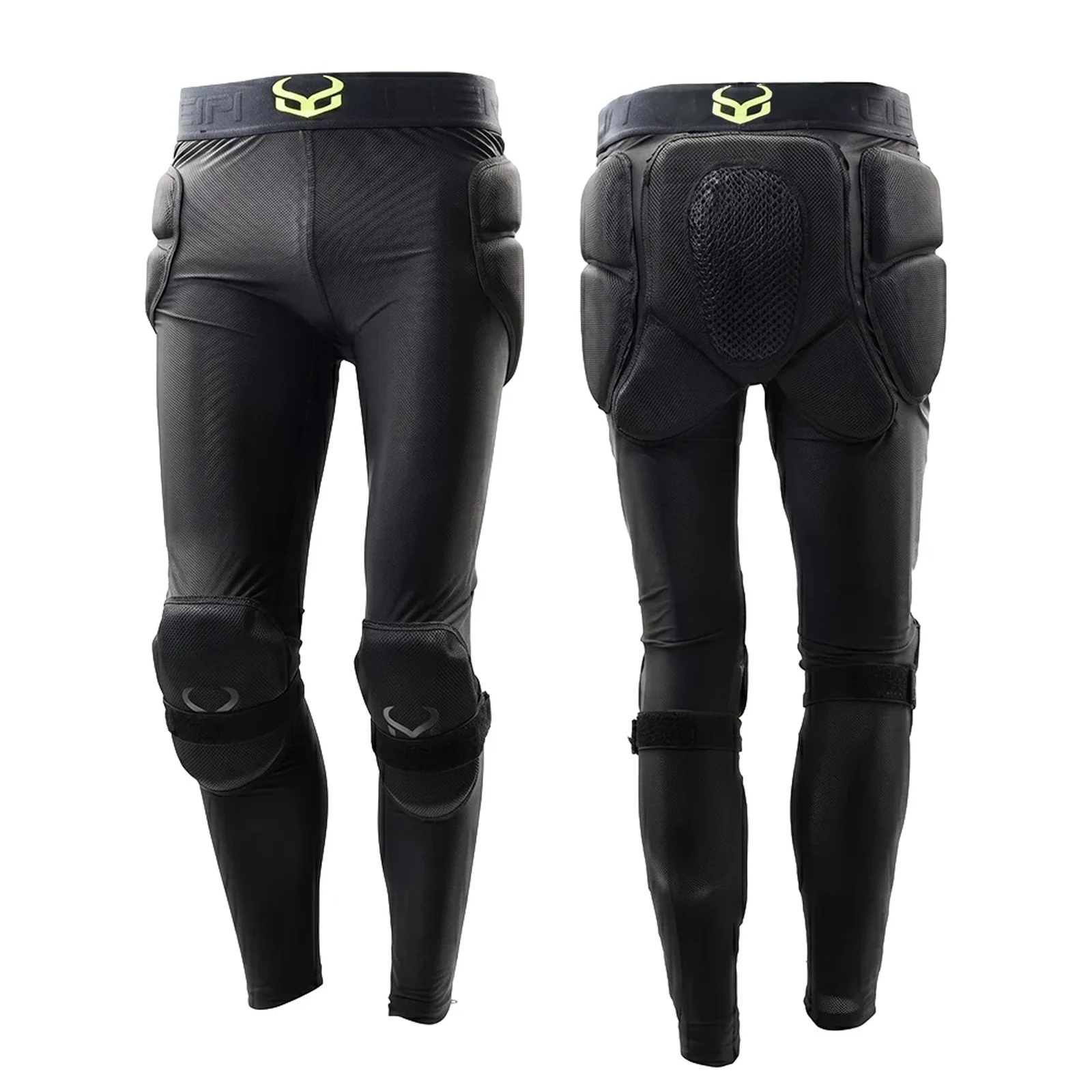
Demon Zero RF D3O Pants
Zero RF Pants combine a stretchy unisex underlayer with fixed padding at the hips, seat and knees. The ESPRO/RF component sits at the tailbone and has a different construction from the soft knee sections. Elastic straps around the knees help adjust the fit; they are not openings for removing the padding.
View features and sizes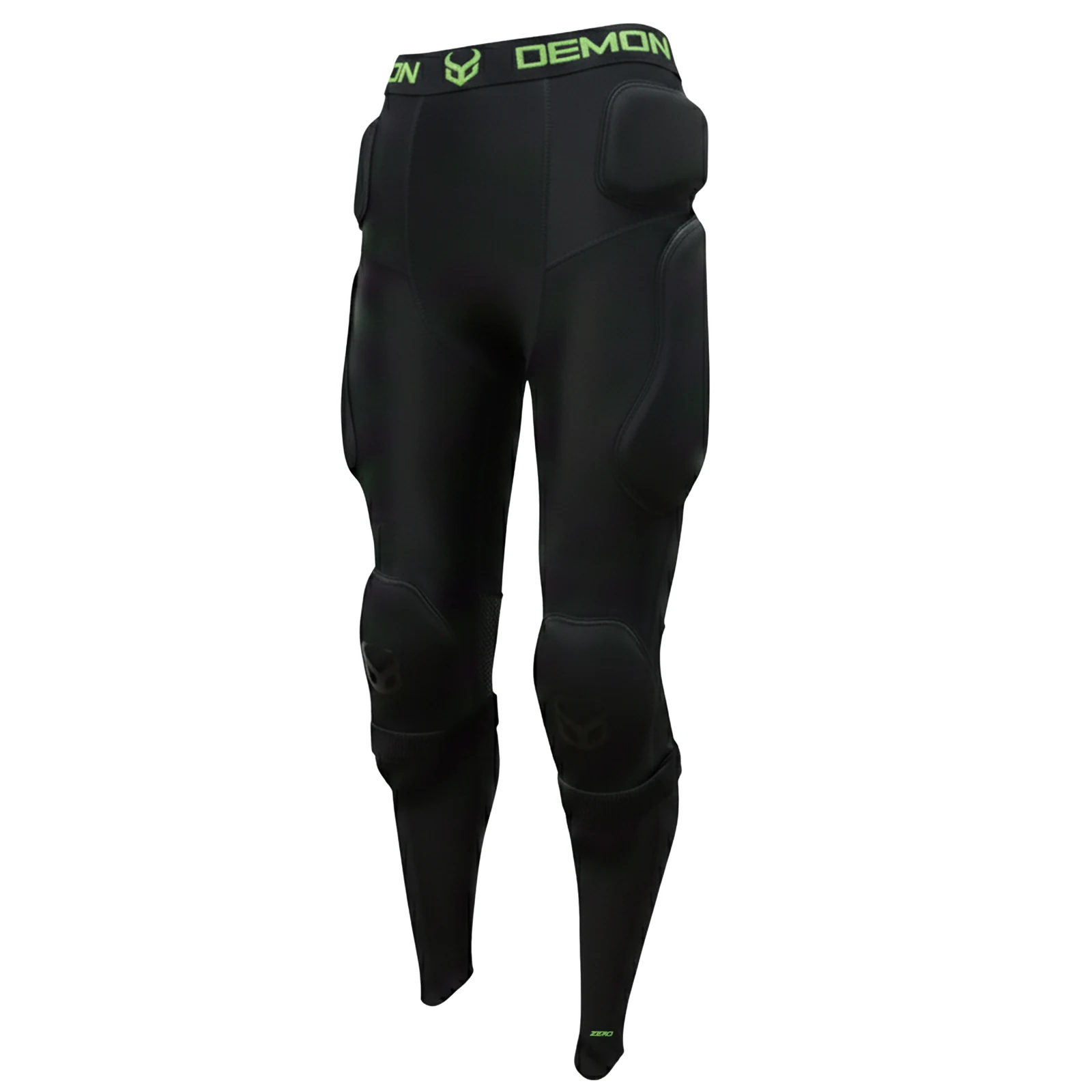
Demon Zero PLUS RF D3O Pants
The full-length PLUS version extends the distribution of foam zones: the garment described has shin pads as well as knee padding. The ESPRO and D3O RF tailbone component remains a separate material combination. The long legs do not form a continuous hard shell around the entire leg. Demon offers this full-length version as unisex; choose your size using its own chart and assess the actual fit.
View features and sizes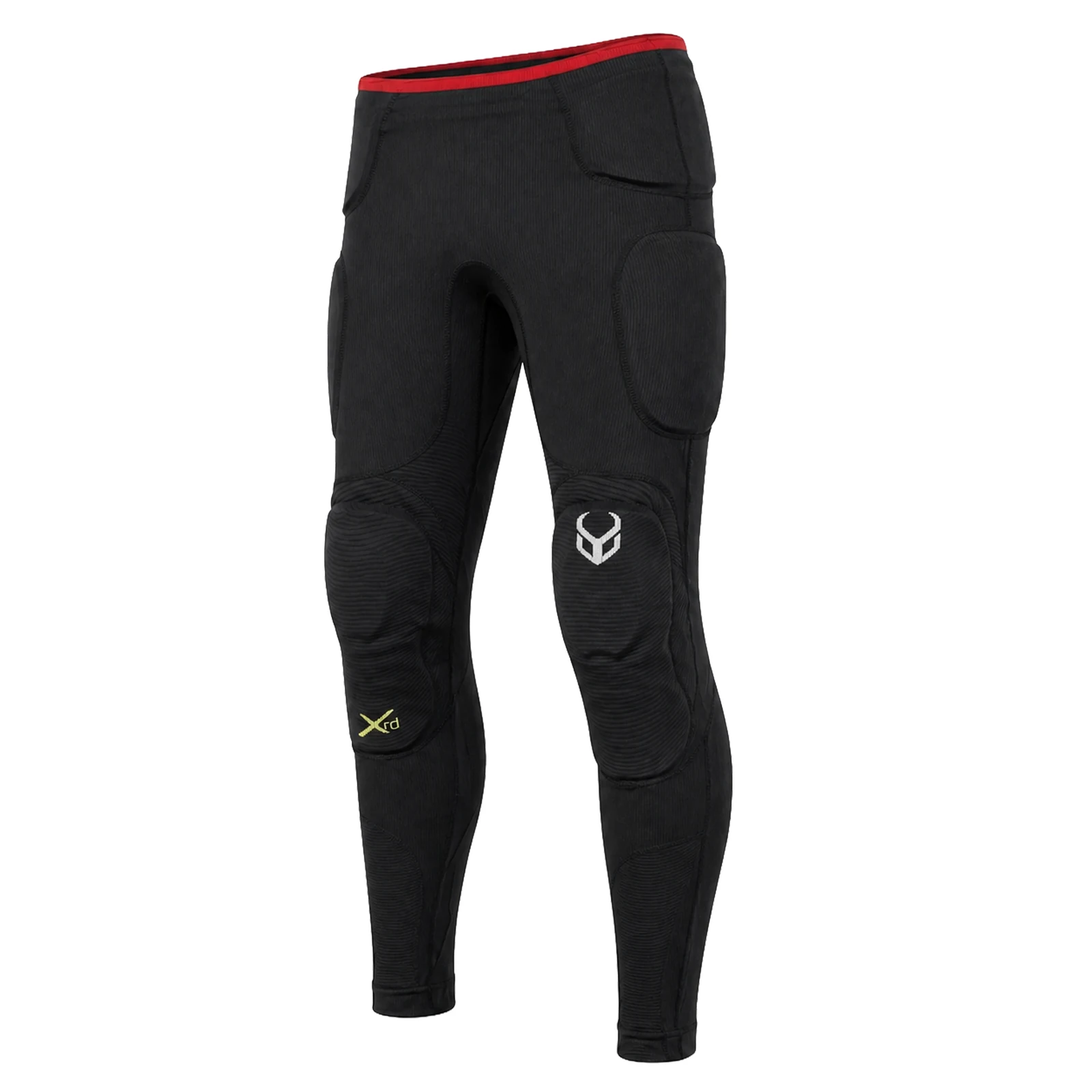
Demon Project X XRD Thermal Pants
Project X combines seven padded zones with thermal, moisture-wicking knit. The full-length pants include XRD inserts at the knees; the shorts leave those areas free. The elastic waist and drawcord help adjust the fit, while size selection also takes height and weight into account. Demon offers this full-length version as unisex; choose your size using its own chart and assess the actual fit.
View features and sizesDemon Flexforce X D3O V5 Men's Pants
The V5 men’s pants are the full-length option within the FlexForce X family. Alongside hip and seat cushioning, they carry knee padding in the same garment. When trying them on, the difference from shorts is most apparent as you squat or bend your knees: the waist may fit well while the knee sections still sit at the wrong height.
View features and sizesDemon Flexforce X D3O V5 Women's Pants
The full-length V5 women’s pants are a separate version with knee padding and an attachment for a compatible Demon top. Waist, hips and knee-pad height all matter to the fit. Simply choosing the same size letter as in the men’s version tells you little about how the garment will actually sit.
View features and sizesDemon Flexforce X V6 D3O/XRD Men's Pants
The full-length V6 men’s version belongs to the FlexForce generation that combines D3O with an additional Rogers comfort layer. The pants add knee zones to the short design. A knee pad and the tailbone comfort insert are different components; one being removable tells you nothing about the other.
View features and sizesDemon Flexforce X V6 D3O/XRD Women's Pants
The V6 women’s pants are documented as a separate full-length version under DS1917. The variants described here are XS and S. Full-length women’s pants need a combined check of waist, hips, leg length and knee-pad position. A well-fitting waist is only the start of the fitting.
View features and sizesLong legs alone do not tell you what is inside the knee area
The long versions share more than a name: their knee padding is part of the same garment as the hip and tailbone padding. The construction nevertheless differs between families. This matters when fitting, adjusting and cleaning the pants. A removable V7 knee pad and a sewn-in Zero pad each need the appropriate treatment.
| Long version | Knee padding | Removal | Additional fitting check |
|---|---|---|---|
| V7 men and women | Pre-shaped comfort foam; not a D3O T6 knee pad. | The designated foam knee pads are removable. | Check knee height as well as the waist and TPS comfort insert adjustments. |
| Zero RF | Soft foam padding with elastic hook-and-loop adjustment. | Fixed; the adjustment strap does not release the pad. | Check the knee position before tightening the strap further. |
| Zero PLUS RF | Foam at the knees and shins. | Both areas permanently sewn in. | Also check the transition to tall sports or winter-sports boots. |
| Project X | XRD foam in internal pockets. | Inserts removable for care. | Check the knee-pocket position and the thermal layer beneath your outer pants. |
On a small screen, scroll this table horizontally. With a keyboard, focus the table region and use the arrow keys.
Sources and image credits: Demon · signed model declarations · 27 October 2026 · Demon · Zero RF · DS0021 · Demon · Project X XRD · DS9030
Fit the pants, knees and footwear together
When trying them on, wear the socks and footwear you will actually use. Bend your knees gently and adopt your usual sporting position. Look for fabric bunching at the boot cuff, a shifting pad edge or outer pants pulling on the underlayer. The waistband can fit well even when the waist-to-knee distance does not suit your leg proportions.
Why might I still choose shorts with separate knee pads?
That lets you choose the fit of the shorts and the knee equipment independently. It can help if one long garment does not fit your waist, hips and knees well at the same time. Try the combination together: the edges should not push each other out of position when you bend.
Can I make long pants fit by moving the knee padding?
Only adjustments designed for that particular model are part of normal use. Tightening a strap does not change the leg length. Do not relocate sewn-in pads or make new openings to compensate for unsuitable proportions.