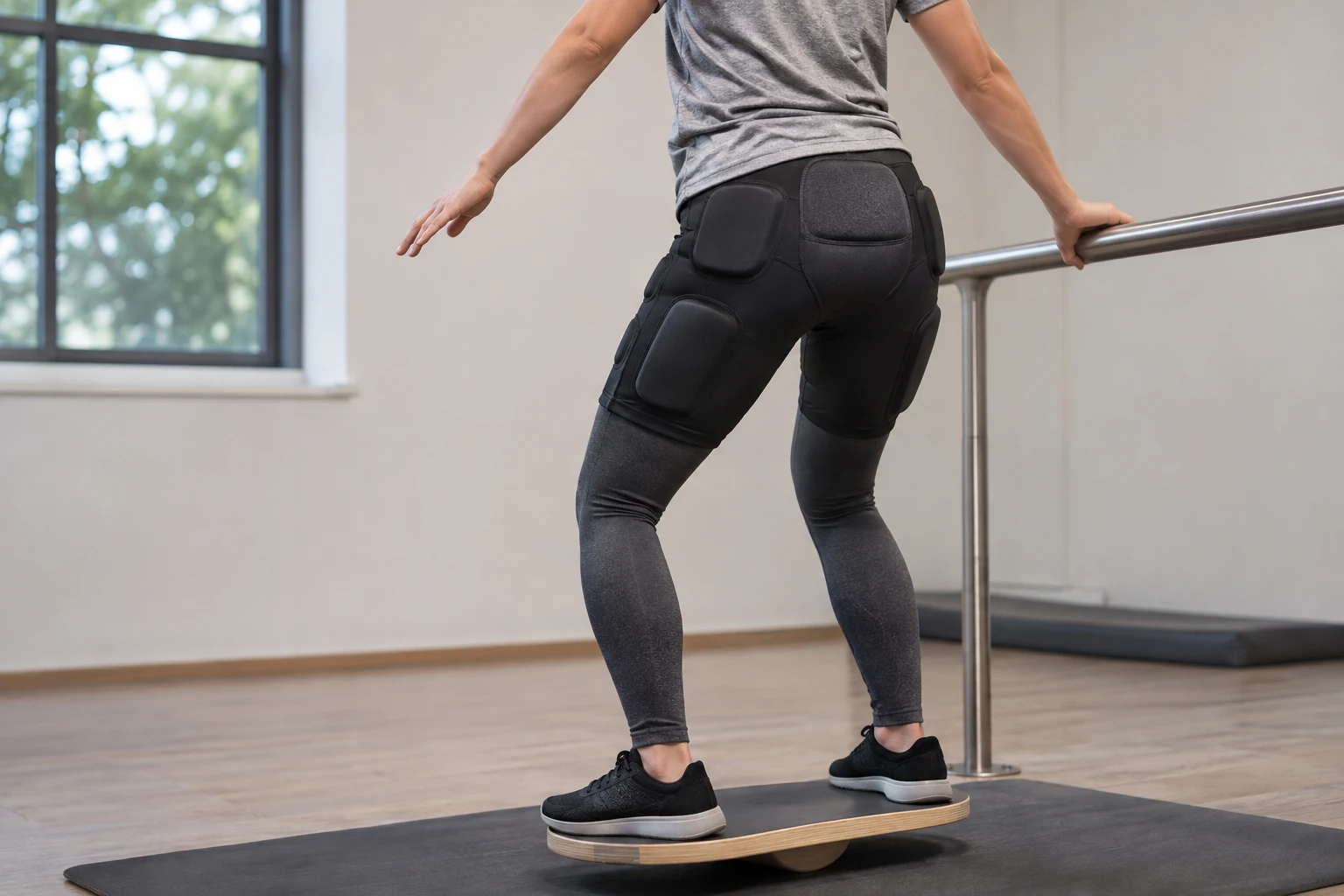
Check movement without deliberately falling
Comparing impact shorts does not require a dramatic demonstration. A few ordinary movements already tell you plenty about the fit. Stand upright, bend your knees gently and take up the position used in your sport. Then sit on an ordinary chair and stand up again. The aim is to feel where the fabric pulls and where the pads end up.
Next, look in a mirror or ask someone to check that the rear section is centred. Wear the outer trousers and other layers you intend to take with you. A fastening that feels comfortable on its own may feel different beneath a second waistband. With a longer version, also check the transition around the knees and lower legs.
This small piece of preparation is chiefly practical. It tells you whether the size chart led you to a suitable size and whether the complete combination leaves room to move. It is not an impact test; there is no need to drop onto the floor or make yourself fall. If something remains unclear, compare the manufacturer reference, model name and relevant instructions. You can then pack clothing you have actually tried together, instead of separate pieces you know only by the sizes on their labels.
A comparison you can make sense of later
Place a note with the full model name and your measurements beside the clothing. Also record which outer trousers, underlayer and footwear you put on. It sounds like a small detail, but makes a second fitting much more useful. You will not need to remember whether that comfortable combination involved a thin thermal layer or a different pair of trousers over the top.
Start with the garment worn as its instructions require. Check the position of the inserts and adjust only the intended straps. Then adopt a few consistent positions. Keep their order the same when comparing, so that you can assess the same moments side by side. Standing calmly, sitting, getting up and imitating your usual sporting stance are enough.
Write down what you actually notice. 'Pulls at my right thigh when the outer trousers are fastened' is more useful than just 'too tight'. Then change one component, such as the outer trousers, and repeat the same movement. This helps distinguish a layering issue from the cut of the protective garment. A chart size remains a starting point; your notes describe how this particular garment fits you.
If you want advice, you now have something concrete: model, measurements, clothing combination and a clear fitting question. A photograph of a legible label can help identify the garment. Keep the instructions with it, and do not compare loose components by squeezing or striking them. The fitting addresses wearing and movement without becoming a materials test.
| Record | Example | Why it helps |
|---|---|---|
| The combination | Long protective pants with my usual outer trousers. | You can repeat the same fitting. |
| The position | Seated and leaning forwards. | You identify when the difference appears. |
| The observation | The outer trousers pull on the waistband. | You can compare one targeted change. |
On a small screen, scroll this table horizontally. With a keyboard, focus the table region and use the arrow keys.