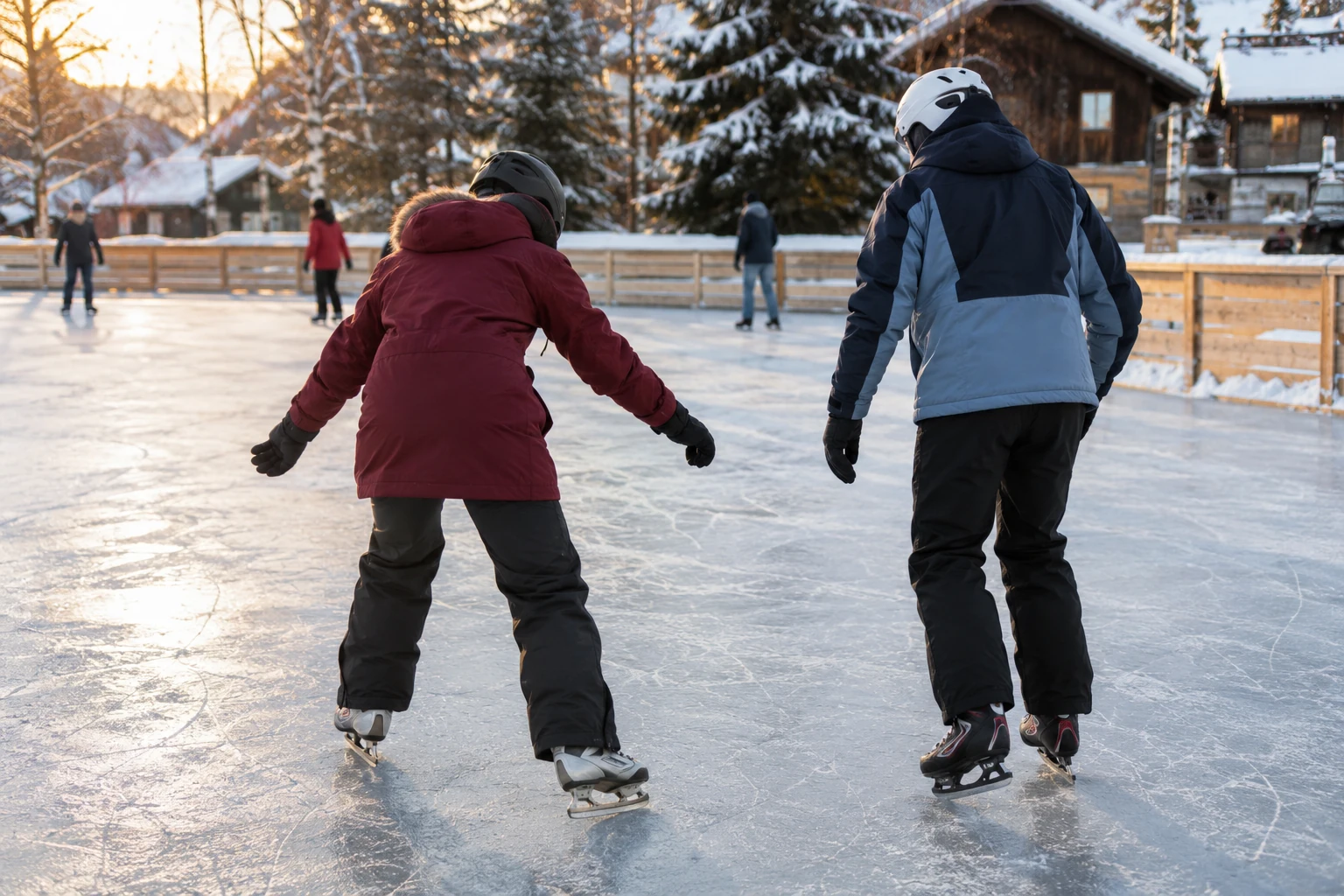
From standing tall to bending low
Ice skating neatly reveals the difference between trying clothing on in a shop and moving in it. A garment may feel perfectly comfortable upright, yet need more room around the hips and thighs in a low stance. The leg length and waistband position suddenly become much more noticeable too.
If you want extra padding for ice skating, start with a model whose manufacturer allows that use. Put it on with your own skating clothes and try different positions. Bend forwards, but also gently shift your weight to either side. Notice whether the rear section stays in the same place and whether the fabric gathers into a thick fold.
A short fitting session at home tells you more about comfort than a letter size alone. Keep it to ordinary movements: sitting down, standing up, bending and straightening. There is no need to fall onto anything. The result can be very personal. One person wants as little bulk as possible beneath slim trousers; another has more room and prefers a different distribution of padding. The ice may be the same, but the clothing combination need not be.
The same underlayer, different skating trousers
Your choice of outer clothing can make the comparison surprisingly specific. Padding edges sit differently under loose winter trousers than under close-fitting skating trousers. Try both combinations only if you are seriously considering both. Check whether the outer fabric falls freely over the pads or pulls the underlayer sideways when you adopt a lower stance.
Then pay attention to how one leg moves in relation to the other. A gentle sideways step on the floor shows whether the inner leg edge pulls or the hip padding rotates with you. Repeat on both sides. You are assessing clothing in motion; there is no need to put on skates or stand on a slippery surface for a fitting.
With long pants, knee position becomes another consideration. Check that the padding sits correctly in the position you usually skate in. Someone else's preferred stance need not be your reference. If you mainly skate relaxed laps, use that ordinary movement for your fitting. With a deeper sporting stance, reassess the room at the hips, waist and knees. The model instructions still determine the intended use.
Include the moment beside the rink too: sitting briefly to change footwear, then standing again. If the rear padding feels different, note that alongside your impression while moving. You can then compare the model across the whole wearing experience, without treating one comfortable moment as proof that the complete combination works.
| Combination or position | Point to consider | Focused comparison |
|---|---|---|
| Close-fitting outer trousers | Room around pad edges. | Check whether the underlayer shifts too. |
| Gentle sideways step | Fit at the hip and leg hem. | Compare left and right. |
| Low stance in long pants | Knee height and tension at the waist. | Assess the whole cut. |
On a small screen, scroll this table horizontally. With a keyboard, focus the table region and use the arrow keys.