Shorts that move with you
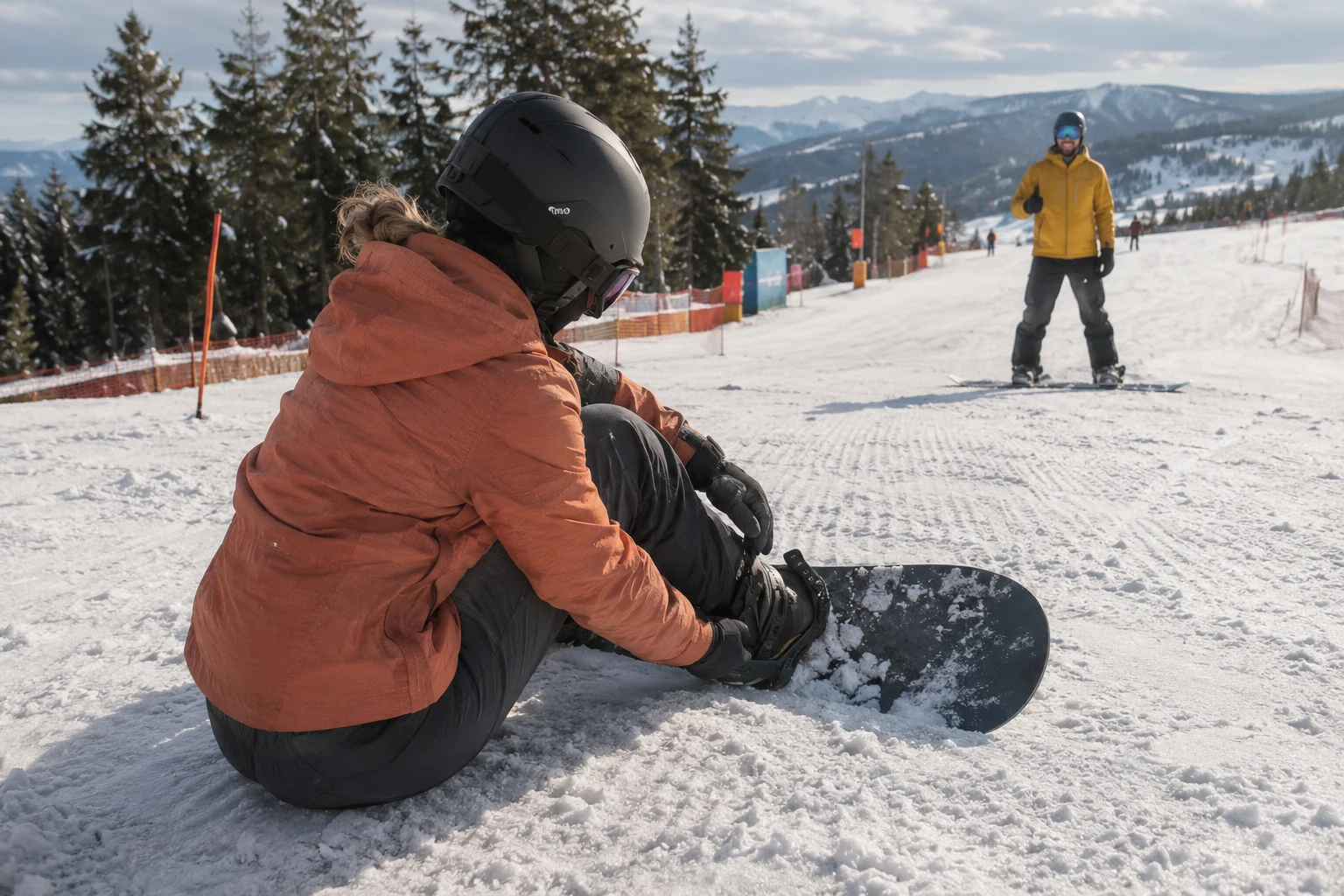
On a morning like this, you spend a fair amount of time sitting briefly in the snow: fastening a binding, waiting for the group or getting ready to try again. Moments later, you are standing with bent knees, carefully shifting your weight from one side to the other. The same garment needs to allow all these positions. Its fit tells you about that more quickly than a long list of technical names.
A useful time to assess the combination is before you leave home. Put on the impact shorts and your snowboard trousers together. Sit down, stand up and get into a low stance. Does the rear pad stay centred? Is there enough room around your thighs? Outer trousers that seem roomy enough on their own may fit differently with another layer underneath.
You can then decide what coverage you want and how much bulk feels comfortable. Check the model's manufacturer information for snowboard use. The shorts are one part of your equipment; the lesson, terrain and a gentle pace of practice also shape how the day unfolds. And when that first turn comes together, the achievement is yours.
Sources and image credits: Demon United — X V7 D3O A.I. Women’s Impact Shorts
The moments between descents matter too
After a few turns, the little routine becomes familiar: stop, undo a fastening and reach towards your feet. Those movements deserve attention when you choose clothing. Notice what happens at the back as you lean forward. Do the outer trousers pull on the waistband, does the underlayer move with them, or does everything stay quietly in place? This helps distinguish which garment is limiting your movement.
If you already wear separate knee pads, you have a clear comparison to make. With shorts, their size and position can be chosen independently. With long pants, you assess the knee zone as part of the whole garment. Also check whether leg hems and straps touch when you bend deeply. For this check, sit calmly on a chair and imitate reaching for a binding; a fall or jump adds no useful fitting information.
Then think about what you want to do during a break. Can you use the fastenings of your outer trousers normally? Does a thermal top bunch up under a waistband? If you want to connect a compatible top to the garment, assess that combination again. Clothing needs to remain practical for changing and toilet breaks too, without assuming a particular front opening from the model name.
Finally, decide which consideration matters most for your day in the snow: keeping your existing knee equipment, wearing a long underlayer, or leaving more space under your outer trousers. Write that preference beside the full model name. It gives you a more useful question than simply looking for the snowboard garment with the most features.
| Moment | What you assess | Look at |
|---|---|---|
| Reaching for a binding | Room to bend forwards. | Waistband, rear pad and outer trousers together. |
| Sitting and standing | Whether the components stay in place. | Seat and any knee zones. |
| Taking a break | Practical access to fastenings. | Overlapping bands, layers and any connection. |
On a small screen, scroll this table horizontally. With a keyboard, focus the table region and use the arrow keys.